As an Amazon Associate I earn from qualifying purchases. This page may contain affiliate links.
Stainless steel kitchen sink maintenance comes down to a few simple tasks: removing water spots, lifting grease, keeping the grain looking even and preventing the dull, hazy film that builds up over time. The right products make these jobs quicker and reduce the risk of scratching the finish. This guide looks at seven products across cleaners, polishes and tools, based on manufacturer specifications, brand reputation and common patterns in owner feedback. We did not test these products ourselves. The selection criteria were the type of stain or residue each product targets, whether it is safe for brushed (satin) and mirror finishes, how much work it takes to use, whether it is safe for everyday use, and how well the brand supports its product line.
Our Top Picks
Quick Comparison
| Product | Best for | Key feature |
|---|---|---|
| Bar Keepers Friend Cleanser | Stubborn stains and discoloration | Mild oxalic acid powder |
| Barkeepers Friend Soft Cleanser | Daily cleaning without scratching | Non-scratch cream formula |
| Weiman Stainless Steel Cleaner and Polish | Regular polishing and fingerprint control | Oil-based, leaves a protective film |
| Weiman Stainless Steel Wipes | Quick wipe-downs between full cleanings | Pre-moistened, ready to use |
| Bon Ami Powder Cleanser | Budget-friendly scrubbing | Fine mineral powder with no bleach |
| 3M Scotch-Brite Non-Scratch Scrub Pad | Scrubbing without marring the grain | Non-abrasive nylon fibers |
| Microfiber Polishing Cloth (general type) | Buffing dry and removing light streaks | Lint-free, low-scratch surface |
Bar Keepers Friend Cleanser
This is a long-established powdered cleanser that many homeowners reach for when a stainless sink has rust-colored spots, tea or coffee staining, or heavy water spotting. It suits people who are comfortable using a mild acid cleaner on a regular but occasional basis. It is not the best choice for a sink with a very delicate mirror finish that you want to keep perfectly pristine.
Key specs
- Active ingredient: oxalic acid in a fine powder base
- Form: powder, applied with a damp sponge or cloth
- Best use: stains, rust spots, hard water deposits
- Rinse thoroughly after use per label directions
Pros
- Removes rust spots and mineral staining effectively
- Widely available and simple to use
- Works on many metal and porcelain surfaces when used as directed
Cons
- Acid-based, so it should be rinsed completely and not left sitting on the surface
- Can dull a high-gloss finish if overused or scrubbed hard
Barkeepers Friend Soft Cleanser
The soft cream version of the same family of products is aimed at routine cleaning rather than heavy stain removal. Owners who want to clean a satin sink every day without worrying about micro-scratching often prefer a gentler formula. It is a sensible pick for households that clean the sink after every meal.
Key specs
- Form: cream, non-scratch formula
- Best use: everyday cleaning and light spotting
- Applied with a soft cloth or sponge
- Rinse after use
Pros
- Gentler than powder for regular cleaning
- Easy to spread evenly across the basin
- Good fit for brushed finishes
Cons
- Less effective on heavy, set-in stains
- Requires a bit more effort than a spray for quick touch-ups
Weiman Stainless Steel Cleaner and Polish
This oil-based spray is designed to leave a light protective film that helps resist fingerprints and gives a uniform sheen. It suits people who want a finished look after cleaning and do not mind a faint oily residue. It is less suited to sinks that need heavy scrubbing, since it is a polish rather than a scouring agent.
Key specs
- Form: aerosol or spray bottle, oil-based
- Best use: polishing and fingerprint resistance
- Apply to a dry or lightly cleaned surface
- Wipe off excess with a clean microfiber cloth
Pros
- Leaves an even, streak-reducing finish
- Helps repel fingerprints between cleanings
- Easy to apply with no scrubbing
Cons
- Oily film can attract dust if over-applied
- Not a substitute for removing mineral or rust stains
Weiman Stainless Steel Wipes
Pre-moistened wipes are a practical choice for quick cleanups after dinner or for wiping water off the sink before it dries. They are best treated as a maintenance tool between more thorough cleanings. Households with limited time often keep a container under the sink for this purpose.
Key specs
- Form: pre-moistened wipes in a resealable container
- Best use: daily wipe-downs and quick polishing
- No mixing or measuring required
Pros
- Fast and convenient for daily use
- Leaves a light shine with minimal effort
- Portable and easy to store
Cons
- Not strong enough for scale, rust or set-in stains
- Recurring use adds up over time compared with bulk cleaners
Bon Ami Powder Cleanser
Bon Ami is a mineral-based powder that has been used for generations for scrubbing sinks and tubs. It is a sensible choice for people who want an economical, bleach-free scouring powder for routine deep cleaning. It is a budget pick, though it works best on the grime that builds up on a sink rather than on deep staining.
Key specs
- Form: fine powder, bleach-free
- Best use: routine scrubbing and light stain removal
- Applied with a damp sponge
- Rinse thoroughly
Pros
- Bleach-free mineral formula
- Economical for regular use
- Good for general grime and soap scum
Cons
- Less effective on rust or hard water scale than acid-based cleansers
- Powder can be messy and needs thorough rinsing
3M Scotch-Brite Non-Scratch Scrub Pad
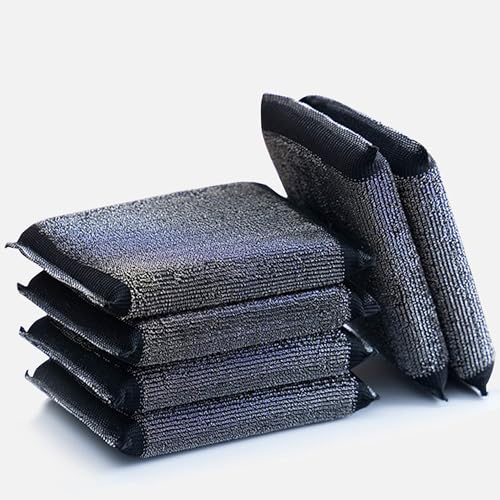
Scrub pads with non-abrasive nylon fibers let you work on a sink without leaving visible marks, especially useful on satin finishes where the grain can show scratches. They pair well with a cream cleanser. Owners who use a dedicated non-scratch pad usually report fewer swirl marks over time than with steel wool or abrasive sponges.
Key specs
- Material: non-abrasive nylon fiber pad
- Best use: scrubbing with cleanser on satin finishes
- Dries fast and resists buildup
Pros
- Helps protect the grain from scratches
- Durable enough for repeated use
- Pairs well with mild cleansers
Cons
- Not aggressive enough for heavy scale or rust
- Can trap food particles if not rinsed
Microfiber Polishing Cloth (general type)
A dedicated microfiber cloth is the simplest tool for buffing a stainless sink dry and removing light streaks. Because it is a general product type, choose one labeled lint-free and low-scratch, and keep one cloth just for the sink so grit from other cleaning does not transfer onto the finish. Experienced cleaners often recommend this over paper towels.
Key specs
- Material: microfiber blend
- Best use: drying, buffing, light polishing
- Wash without fabric softener to keep it absorbent
Pros
- Leaves fewer streaks than paper towels
- Reusable and inexpensive to replace
- Works well with any cleaner or polish
Cons
- Dirty cloths can scratch the surface, so washing matters
- Does nothing for stains on its own
Buying Guide
Selection Criteria
Start by identifying the kind of problem you have. Routine water spots and fingerprints call for a gentle daily cleaner and a dry microfiber wipe. Rust specks, tea stains and hard water scale call for a mild acid-based cleanser used occasionally. Dull, hazy surfaces may need a polish. Matching the product to the problem avoids overusing a strong cleaner, which can dull the finish over time.
Important Features to Look For
- Finish compatibility. Brushed (satin) and mirror finishes respond differently. Check that the product is labeled safe for stainless steel and, if possible, mentions the grain.
- Abrasiveness. Powders and gritty scrubbers clean harder but can leave fine scratches. Cream and liquid formulas are gentler.
- Acid content. Acid-based cleansers remove mineral and rust stains well but must be rinsed fully.
- Residue. Oil-based polishes add a protective layer but can attract dust if over-applied.
Specs to Check
- Intended use stated on the label (daily cleaning, stain removal, polishing)
- Form (powder, cream, spray, wipe)
- Whether the manufacturer recommends rinsing and the number of rinses
- Whether it is chlorine-free if you also clean a porcelain or composite sink
Choosing by Need
- Daily upkeep: a microfiber cloth, possibly with a pre-moistened wipe.
- Water spots and fingerprints: a polish with a light protective film.
- Rust or tea stains: a mild acid cleanser used with a non-scratch pad.
- Scratch-sensitive satin finish: a soft cream cleaner and nylon scrub pad.
Things to Watch Out For
- Never mix cleaners, especially chlorine bleach with acid-based products, as this can release harmful fumes. Use products one at a time and rinse between them.
- Avoid steel wool and abrasive scrubbers, which can leave permanent scratches.
- Always follow the manufacturer’s directions on dwell time, and do not leave acid cleaners on the surface.
- If you have questions about chemical safety for your household, consult the product label or a qualified professional.
FAQ
How often should I clean a stainless steel kitchen sink?
Most households wipe the sink down daily to prevent water spots and food residue from setting. A deeper cleaning with a mild cleanser once or twice a week is typical for busy kitchens, and a stain-removal pass is only needed when marks appear.
Can I use vinegar on a stainless steel sink?
Diluted white vinegar is often used to dissolve hard water spots and is generally considered safe for stainless steel when rinsed afterward. Avoid leaving it sitting on the surface for long periods, and do not use it on the sink more often than needed.
What causes rust spots on a stainless steel sink?
Rust spots are usually caused by small iron particles, such as from steel wool, cast-iron cookware or tap water with iron content, sitting on the surface. They are not rust in the base metal and can often be removed with a mild acid cleanser and a non-scratch pad.
Is a polish necessary for stainless steel sinks?
A polish is optional. It can reduce fingerprints and improve the sheen, but cleaning and drying the sink regularly will matter more than polishing. Use polish sparingly, since heavy buildup can attract dust.
Which direction should I scrub a stainless steel sink?
Scrub in the direction of the grain, which is usually visible as fine parallel lines on brushed finishes. Scrubbing across the grain can make scratches more noticeable.
Can I use bleach to clean a stainless steel sink?
Chlorine bleach is generally not recommended for stainless steel because it can cause pitting over time, especially if left on the surface. Use a non-chlorine cleanser for routine work. Never mix bleach with acid cleaners.
Do I need different products for a satin finish and a mirror finish?
Mirror finishes show scratches and haze more clearly, so they benefit from gentler cleaners and microfiber drying. Satin finishes hide small marks better but still respond best to non-abrasive products that follow the grain.
Conclusion
For most households, the most effective routine is simple: a microfiber cloth for daily drying, a soft cream cleanser and nylon pad for regular cleaning, and an occasional acid-based cleanser for rust or mineral stains. Oil-based polishes such as the Weiman spray suit people who want a uniform sheen and fingerprint resistance. Pre-moistened wipes are handy for quick cleanups, while a budget powder like Bon Ami suits general scrubbing. Choose based on your main problem, and avoid abrasive tools that can leave scratches. For more on cleaning the whole sink, see How to Clean a Kitchen Sink: 5 Steps for Stainless and Porcelain, and if you want to restore a dulled finish, How to Polish Stainless Steel Kitchen Sink in 5 Steps walks through the process step by step.