 By Miles Sinclair
Updated November 2026
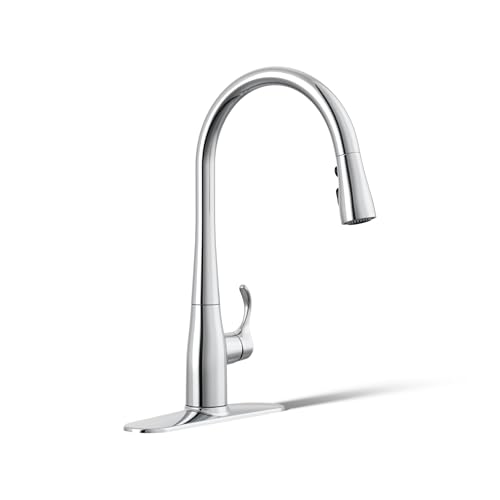
A kohler pull down faucet hose replacement is a straightforward repair you can usually finish in under an hour with basic hand tools. You will shut off the water supply, disconnect the old spray hose from the faucet body and weight assembly, install a matching replacement, and check the connections for leaks. The steps below cover the most common Kohler pull-down designs and the mistakes that cause repeat problems.
When a Kohler Pull-Down Hose Needs Replacing
The spray hose on a pull-down faucet takes more wear than almost any other part of the fixture. It is pulled out and retracted many times a day, bent sharply at the base of the spout, and exposed to hot and cold water. Owners often notice a few clear warning signs before the hose fails outright.
Shopping for one? See our guide: 5 Best Moen Replacement Faucet Hose Options for Pull-Down Kitchen Faucets.
- Water dripping or spraying from the hose itself, not from the spout or handle
- Visible cracks, bulges or flattened sections along the hose jacket
- A hose that no longer retracts fully or sits crooked in the sink
- Low spray pressure that persists after you clean the spray head
- Moisture or mineral crust at the connection under the sink
If the leak is coming from the handle, the base of the spout or the supply lines, the spray hose may not be the cause. Check those areas before buying parts.
Tools and Parts You Will Need
Before you start, confirm which hose you need. Kohler pull-down faucets use several different hose lengths and connector styles depending on the model and year. Look for the model number printed on the faucet body or in the installation guide, then match it to a replacement from Kohler’s parts catalog. A compatible hose from a reputable third-party maker can also work if the connector threads and length match exactly.
| Item | Why you need it |
|---|---|
| Replacement pull-down hose (matched to model) | Correct length, connector and weight attachment |
| Adjustable wrench or basin wrench | Loosens nuts in tight space under the sink |
| Flashlight or headlamp | Lets you see the connections clearly |
| Bucket and towels | Catches residual water in the lines |
| Plumber’s grease or silicone-based lubricant | Eases connector seating and helps prevent leaks |
| Paper towels and a small brush | Cleans mineral deposits from threads and seats |
Keep the manufacturer’s installation sheet nearby. Torque values and connector orientation vary by model, and the sheet is the most reliable reference for your specific faucet.
Step-by-Step: Replacing the Kohler Pull-Down Hose
Step 1: Shut off the water supply
Locate the hot and cold shutoff valves under the sink and turn both clockwise until they stop. Open the faucet to relieve pressure and let any remaining water drain. Place the bucket and towels under the work area.
Step 2: Remove the sink-side access
Clear the cabinet under the sink so you can reach the back of the faucet body. Many Kohler pull-down designs have a weight or counterweight clipped to the hose below the sink deck. Slide it down to expose the hose end and the connector.
Step 3: Disconnect the spray hose from the faucet body
The hose typically threads or clips into a hose connector block inside the faucet base. Unscrew the connector nut or release the locking clip. If the nut is stiff, hold the faucet body steady with one wrench and turn the connector with the other. Avoid twisting the spout itself, which can loosen the mounting nut above the deck.
Step 4: Detach the old hose from the spray head
At the top of the hose, the spray head or docking unit is usually held by a coupling nut or a snap fitting. Remove the head and note the orientation of any washers or O-rings so the new parts seat the same way.
Step 5: Inspect the connectors
Check the faucet-side connector for cracks, corrosion or mineral buildup. Clean the threads with a small brush and wipe the seating surfaces dry. If the connector itself is damaged, replace it before installing the new hose, since a new hose cannot seal against a worn fitting.
Step 6: Attach the new hose
Thread the new hose through the spout and into the faucet body connector. Apply a thin film of plumber’s grease to any O-rings. Hand-tighten the connector, then give it a short additional turn with a wrench. Do not overtighten plastic or composite fittings, since this can crack the connector.
Step 7: Reconnect the spray head and weight
Attach the spray head to the top of the new hose using the same orientation as the old one. Re-clip the weight or counterweight onto the hose so it sits a few inches below the deck. The weight helps the hose retract smoothly, so do not remove it.
Step 8: Restore water and test
Turn the shutoff valves back on slowly. Run both hot and cold water at the faucet with the spray head docked, then pull the hose out fully and run the spray. Check the connection under the sink with a dry paper towel. Let the faucet run for two or three minutes, then recheck for drips.
Common Mistakes to Avoid
- Buying by faucet name instead of model number. Two Kohler faucets that look identical can use different hose connectors.
- Overtightening plastic connectors. Cracked fittings are one of the most frequent causes of a second leak.
- Skipping the O-ring check. A missing or pinched O-ring will leak even with a new hose.
- Forgetting the weight. Without the counterweight, the hose may not retract and can get caught in the sink.
- Testing before pressure is restored. Run the water slowly at first to spot leaks before they become floods.
Tips for a Cleaner Repair
- Take a photo of the connector layout before you disconnect anything.
- Keep small parts in a labeled cup so nothing gets lost in the cabinet.
- If mineral buildup is heavy, soak the spray head in white vinegar before reinstalling it.
- Check the aerator and spray head filters while the faucet is open, since clogs can mimic a bad hose.
- If the faucet body is the source of the problem, a related guide like Kohler Faucet Hose Replacement: Step-by-Step Guide for Homeowners can help you decide between a hose and a full cartridge repair.
Recommended gear
A basin wrench is the single most useful tool for this job because it reaches the connector nut in tight cabinet space that a standard wrench cannot. Plumber’s grease keeps O-rings supple and helps connectors seat evenly, which lowers the chance of a slow drip after installation. A small inspection flashlight or headlamp lets you read connector markings and check seating without contorting your body under the sink.
- Basin wrench for reaching connector nuts under the sink View on Amazon
- Plumber’s grease for O-rings and threaded connectors View on Amazon
- Headlamp for working in dim cabinet space View on Amazon
FAQ
Can I replace the pull-down hose without removing the faucet?
In most cases, yes. You can disconnect the hose from below the sink and feed the new one through the spout without lifting the faucet off the deck. Some designs make it easier to remove the spout, so check the installation sheet for your model.
How long does a Kohler pull-down hose usually last?
Lifespan depends on water quality, how often the hose is pulled, and how well the weight keeps it retracting. Owners often report needing replacement after several years of daily use, though many hoses last longer. Replace it sooner if you see cracks or persistent leaks.
Do I need to replace the whole faucet if the hose fails?
No. The hose is a separate, replaceable part. Replacing it is usually far simpler than replacing the faucet, as long as the rest of the fixture is in good working order.
Why does my new hose still drip at the connection?
The most common causes are a missing or misplaced O-ring, a cracked connector, or a nut that is not tightened enough. Shut off the water, inspect the seals, and reseat the connector. If the drip continues, the connector itself may need replacing.
Will any pull-down hose fit my Kohler faucet?
Not always. Hose length, connector type and weight attachment vary by model. Match the replacement to your faucet’s model number before buying.
Why is my spray weak after the hose replacement?
Check the spray head and aerator for mineral clogs first. If the flow is still low, confirm the hose is not kinked under the sink and that the shutoff valves are fully open.
Should I hire a plumber for this repair?
Many homeowners can handle a hose swap, but if the connectors are seized, the supply lines are damaged, or you are unsure about shutting off water safely, consult a licensed plumber.
Where can I find the right replacement part?
Start with the model number on your faucet and the parts diagram in the installation guide. For a broader look at compatible parts and how to read a parts catalog, see Kohler Faucet Parts Replacement Catalog: How to Find the Right Part (2026).
Conclusion
A kohler pull down faucet hose replacement comes down to matching the correct part, shutting off the water, and reconnecting each fitting cleanly. Take your time at the connectors, keep the weight attached, and test the faucet slowly before walking away. If the leak continues after a careful reinstall, the problem may lie in the faucet body or supply lines, and a professional can help you narrow it down.
Related reading
- Best Pull-Down Kitchen Faucets: 6 Moen and Kohler Models Compared
- 6 Best Kohler Pull Down Faucets: 6 Models Compared (2026)
- Delta Pull Down Faucet Head Replacement: A Step-by-Step Guide (2026)
- Kohler Tub Faucet With Diverter: Step-by-Step Repair and Replacement Guide
Ready to choose one?
About Miles Sinclair
Miles Sinclair is part of our editorial team and reviews and edits our kitchen faucets & sinks guides, checking product details against manufacturer specifications and owner feedback.