 By Caleb Morgan
Updated November 2026
Most leaks and drips in a Pfister bathtub faucet come from a worn cartridge, a failed seat or a damaged valve stem, and you can usually fix them with basic hand tools in under an hour. This guide walks you through identifying the problem, shutting off the water, removing the handle and replacing the worn part so the faucet stops dripping. Pfister pieces vary by series, so check your model before buying parts.
Identify the Problem Before You Start
Before you take anything apart, figure out where the water is coming from. A steady drip from the spout usually points to the cartridge or valve. Water leaking around the handle or from the base of the handle often means a worn O-ring or packing nut. If water comes out of the showerhead when the tub spout is on, the diverter is likely failing. Repair Bathtub Faucet Leak: A Step-by-Step Guide to Stop Drips covers how to narrow down the source of a leak in more detail.
Shopping for one? See our guide: 7 Best Bathtub Faucet Drip Repair Kits and Parts (2026).
Shut Off Water and Remove the Handle
Close the hot and cold supply valves under the tub or at the access panel. Then open the tub faucet to drain any remaining water. Place a towel over the drain to keep small screws from getting lost.
- Pry off the decorative cap or button on the handle with a flat-blade screwdriver.
- Remove the handle screw and lift the handle straight off the stem.
- Unscrew the escutcheon or trim plate by turning it counterclockwise.
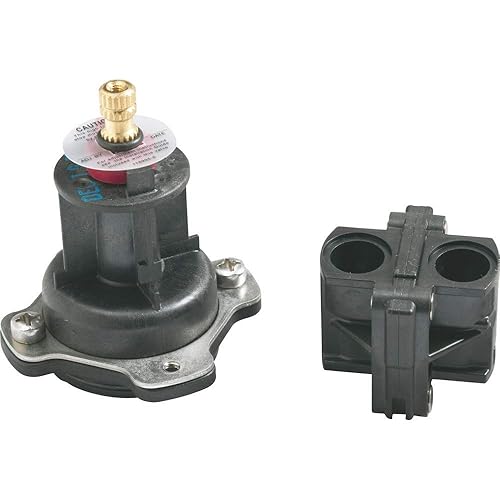
- Remove the retaining nut or cartridge clip, then pull out the cartridge.
Pfister single-handle designs use a cartridge that lifts out as one unit, while some older two-handle styles use compression stems. How to Repair a Leaky Bathtub Faucet Single Handle: Step-by-Step (2026) explains the single-handle layout in detail.
Replace the Cartridge or Worn Parts
Take the cartridge to a hardware store or check the markings on its base so you can match it exactly. Mismatched cartridges are the most common reason a repair fails. Before installing the new one, inspect the valve seat inside the tub body for mineral buildup or pitting. Clean it with a soft cloth and a little vinegar if needed.
Lubricate the new O-rings with plumber’s silicone grease, not petroleum jelly, which can swell rubber parts. Seat the cartridge with its alignment tab facing the correct direction, then reinstall the clip, trim plate and handle. Turn the water back on slowly and check for leaks at the spout and handle before you close the cover.
Reassemble and Test the Faucet
Run the hot and cold sides separately for about 30 seconds each. Check that the temperature changes smoothly across its range and that the diverter sends water to the spout and showerhead as expected. If the spout still drips with the handle fully closed, the seat may need replacing, which is a separate step. How to Repair a Dripping Bathtub Faucet: A Step-by-Step Guide walks through what to do when a new cartridge does not stop the drip.
Tips and Common Mistakes
- Do not force the handle or trim plate; stripped plastic parts are hard to replace.
- Take a photo of each step so you remember the order of the parts.
- Buy the replacement cartridge by model number, not just by series name.
- Do not overtighten the handle screw, which can crack the handle or damage the stem.
- If the valve body is corroded or cracked, replacing the whole faucet may be more practical than repairing it.
Recommended Gear
- Plumber’s silicone grease: It lubricates O-rings without breaking down rubber seals. View on Amazon
- Phillips and flat-blade screwdriver set: Pfister handles and trim plates use both screw types. View on Amazon
- Adjustable wrench with a rubber grip: It helps you loosen retaining nuts without scratching the finish. View on Amazon
FAQ
Can I repair a Pfister bathtub faucet without replacing the whole unit?
In most cases, yes. Cartridges, O-rings and seats are sold separately, so you only need to replace the worn part.
How do I find the right replacement cartridge?
Check the model number on the faucet or packaging, then match it to the cartridge number. If you are unsure, bring the old cartridge to a supply store for comparison.
Why does my faucet still drip after I replace the cartridge?
The valve seat may be worn or mineral-coated, or debris may be trapped under the new cartridge. Clean the seat and reinstall the cartridge carefully. If problems continue, consult a licensed plumber.
Conclusion
Most Pfister bathtub faucet leaks trace back to a worn cartridge, O-ring or seat, and a careful repair can stop them for good. Work slowly, match parts by model, and test the faucet before closing everything up. If the valve body is damaged or the leak returns, a professional plumber can confirm the best fix.
Related reading
- Price Pfister Faucet Repair: A Step-by-Step Guide to Stop Leaks
- Moen Chateau Bathtub Faucet: Identify, Fit and Repair Guide (2026)
- Kohler Artifacts Bathtub Faucet: Identify, Repair and Maintain It (Step-by-Step)
Ready to choose one?
About Caleb Morgan
Caleb Morgan is part of our editorial team and reviews and edits our kitchen faucets & sinks guides, checking product details against manufacturer specifications and owner feedback.