 By Miles Sinclair
Updated November 2026
To uninstall a kitchen faucet, you shut off the water supply, disconnect the supply lines, and loosen the mounting nuts underneath the sink. Once those are off, the faucet lifts out and the sink is clear for a replacement or repair. Most people finish in under an hour with basic hand tools, though rusted nuts can slow things down.
Before You Start: Shut Off the Water
Turn off the water before you touch any connections. Look for two small shutoff valves under the sink, one on the hot side and one on the cold side, and turn each one clockwise until it stops. If the valves are stiff or do not close fully, shut off the main water supply to the house instead. Then open the faucet to drain the remaining water and relieve pressure in the lines.
Shopping for one? See our guide: 7 Best Delta Kitchen Faucet Parts (2026): Repair-Ready Picks.
How to Disconnect and Remove the Faucet
- Place a towel and a shallow pan under the sink to catch residual water.
- Disconnect the hot and cold supply lines from the shutoff valves using an adjustable wrench. Hold the valve steady with a second wrench so you do not twist the pipe.
- If your faucet has a spray hose, unscrew it from the base or the quick-connect fitting and pull it through the deck.
- Disconnect the pull-out or sprayer weight, if one is attached, and any power cord for a touchless model.
- Locate the mounting nuts or mounting rod under the sink. Most faucets use either a pair of nuts on threaded studs or a single nut on a rod.
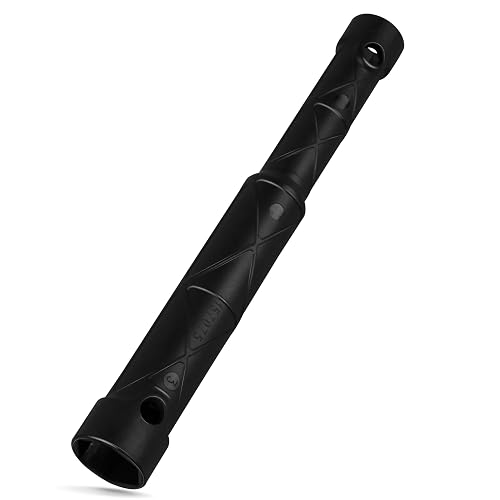
- Loosen the nuts by turning them counterclockwise. A basin wrench works best because it reaches the nuts from above the cabinet floor.
- Lift the faucet straight up and out of the mounting holes. Keep the gaskets and any plastic washers in one place so you can compare them with the new faucet.
Dealing With Stuck or Corroded Nuts
Mineral buildup and corrosion often freeze nuts in place. Apply penetrating oil and wait at least 15 minutes before trying again. Work the nut back and forth a quarter turn at a time rather than forcing it in one direction, which can crack the mounting stud. If the stud breaks, you may need to cut it and remove the remaining threads with a hacksaw or rotary tool.
Removing the Deck Plate and Clearing the Sink
Some faucets sit on a deck plate or escutcheon, a flat metal or plastic piece that covers the holes in the sink. Lift it off once the faucet is free. Then wipe the sink surface and check the holes for old putty or sealant. Scrape away residue with a plastic putty knife so the new faucet seats flat. Do not use metal tools on stainless or enamel surfaces, since they can scratch the finish.
Common Mistakes to Avoid
- Skipping the shutoff step. Even with the valves closed, water can remain in the lines and spray when you disconnect them.
- Using pliers on the supply line nuts. This rounds the corners and makes them harder to loosen later.
- Throwing away the old mounting hardware. Some replacement faucets require the same nuts, washers or gaskets.
- Forgetting to photograph the connections. A quick picture helps when you reconnect the new faucet.
- Overtightening the new supply lines during reinstallation, which can crack plastic fittings.
Recommended Gear
- Basin wrench: It reaches mounting nuts in tight spaces under the sink that a standard wrench cannot. View on Amazon
- Penetrating oil: It loosens corroded nuts and reduces the risk of breaking studs. View on Amazon
- Adjustable wrench set: It handles the supply line fittings and shutoff valves without rounding them. View on Amazon
FAQ
Do I need to turn off the main water supply?
Not always. If the shutoff valves under the sink open and close smoothly, closing them is enough. If they are stiff, leak, or do not fully stop the flow, shut off the main supply to avoid a flood.
Can I uninstall a faucet without removing the sink?
Yes, in most cases. The faucet mounts to the sink deck from underneath, so you can work entirely from the cabinet without lifting the sink out of the countertop.
What if the faucet still will not come loose after removing the nuts?
Old sealant or putty may be gluing the base to the sink. Run a plastic putty knife around the base to break the seal, then gently rock the faucet side to side while lifting. If the job is becoming difficult or you are unsure about the connections, consult a licensed plumber.
Conclusion
Shut off the water, disconnect the supply lines, and loosen the mounting nuts, and the faucet will lift out. Take your time with corroded hardware and keep the old parts for reference. Once the sink is clear, you can move on to installing your new faucet with confidence.
Related reading
- Pull-Down Kitchen Faucets: How They Work and What to Check
- Moen Kitchen Faucet Parts Diagram: How to Find and Use Yours
- Moen Kitchen Faucet Dripping: 6 Causes and How to Fix Each One
Ready to choose one?
About Miles Sinclair
Miles Sinclair is part of our editorial team and reviews and edits our kitchen faucets & sinks guides, checking product details against manufacturer specifications and owner feedback.